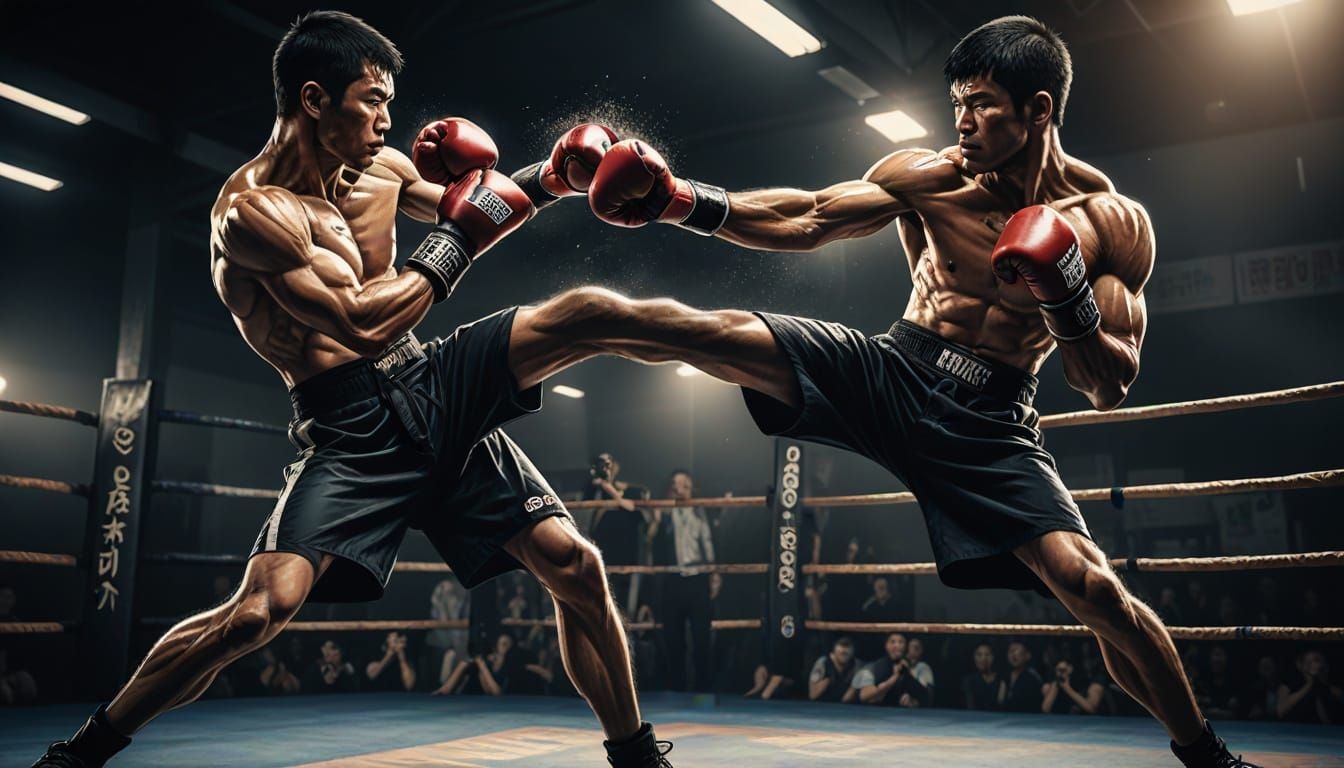
Elbow strikes in kickboxing: the definitive guide to permitted techniques
Elbow strikes in combat sports: between prohibition and mastery
In a Bangkok training hall, under the humidity of a September afternoon, a young fighter executes a perfect Sok Ti—horizontal elbow strike—and sees his sparring partner wince. Two thousand kilometers away, in a European kickboxing gym, a coach stops a similar movement mid-execution. Same technique, opposite reactions. This contrast illustrates a fundamental reality for anyone exploring striking arts: the elbow strike occupies a paradoxical position in the combat sports landscape. While some disciplines elevate it to an art form, others ban it categorically. Understanding these distinctions isn’t academic—it directly impacts your training choices, competition possibilities, and effectiveness as a fighter.
The question of elbow strikes in kickboxing isn’t simply a matter of yes or no. It encompasses a set of rules, techniques, and philosophies that vary significantly between organizations and martial traditions. Before investing months of training in a technique, every practitioner should understand the regulatory framework governing its use.
Le piège à éviter
Many beginners assume that what their coach allows during training automatically applies in competition. This assumption proves costly: a fighter who develops a habit of using elbows in sparring may receive a disqualification in a tournament where they remain prohibited. Always distinguish between training context and competitive rules. Ask your instructor explicitly about each context.
Regulatory landscape of elbow strikes by combat discipline
The combat sports world doesn’t speak with one voice on elbow strikes. Each discipline has developed its own regulatory framework based on historical traditions, safety considerations, and tactical philosophy.
Let’s examine how different organizations position themselves on this technique:
- American full-contact kickboxing prohibits elbow strikes in competition. Fighters wear padded gloves, and the technical repertoire includes punches, kicks, and sweeps—nothing more. This restriction reflects a concern for athlete safety and the desire to minimize cutting injuries that elbows frequently cause.
- K-1 rules (Japanese kickboxing) adopt the same restrictive approach. Elbow strikes are banned from professional competitions organized under this banner. The reasons combine safety with spectator considerations—elbows create dramatic wounds that complicate event broadcasting and alter the visual perception of fights.
- Muay Thai takes the opposite approach. Elbow strikes (called « Sok ») constitute a fundamental part of the discipline’s technical arsenal. Far from being merely tolerated, they’re actively scored by judges and represent a decisive factor in many victories. This explains why Muay Thai is often considered one of the most complete striking arts.
- Semi-contact or light-contact formats generally prohibit elbow strikes due to the reduced control inherent in point-fighting formats. The objective shifts from neutralizing an opponent to scoring cleanly—which elbows complicate.
For practitioners, this means checking not only their sport’s general rules but also the specific regulations of their federation or competition organizer. Some gyms allow elbow training even when competitions exclude them—this flexibility serves technical development without compromising competitive eligibility.
Le réflexe de pro
Before each competition, obtain and read the specific rulebook of your organizing federation. Rules evolve, and what applied last year may have changed. Allocate fifteen minutes to this research—it prevents disqualifications and lets you adjust your tactical preparation accordingly.
Why the ban? Understanding regulatory rationales
The prohibition of elbow strikes in certain kickboxing formats isn’t arbitrary. It stems from objective risk assessments that organizers have conducted over decades of competition management.
The primary factor involves injury severity. An elbow strike delivers concentrated force through a sharp bone structure. Unlike a gloved fist, which distributes impact across padded surfaces, an elbow concentrates kinetic energy on a small contact point. Clinical data from emergency rooms and sports medicine studies document the consequences: deep lacerations requiring stitches, nasal fractures, and occasionally orbital fractures. In worst-case scenarios, uncontrolled elbow contact near the temple or back of the head can cause concussions.
A second consideration involves control difficulty. Even experienced fighters struggle to modulate elbow strike force precisely. The technique’s mechanics—generated from the shoulder and enhanced by body rotation—produce significant momentum that hand control alone cannot moderate. In competitive contexts where judges must protect athletes, this unpredictability makes elbows inherently risky.
Finally, the prohibition reflects philosophical choices about what combat sports should represent. Federations balance entertainment value against athlete welfare, and elbow strikes polarize audiences. Some viewers appreciate their brutal efficiency; others find them excessive. Regulatory bodies have generally opted for restriction, reserving elbows for disciplines (like Muay Thai or Lethwei) where participants have explicitly accepted the risk through their training choices.
This explains why UFC doesn’t feature traditional Muay Thai elbow techniques, despite its global reach. The American promotion has developed its own technical identity distinct from Thai boxing traditions, prioritizing striking combinations that its audience expects.
Elbow techniques for disciplines where they’re authorized
When regulations permit, elbow strikes become potent weapons. Their short distance requirement makes them valuable in clinch situations where longer strikes become ineffective. Let’s examine the fundamental techniques that practitioners should develop.
The horizontal elbow strike (Sok Ti) serves as the foundation. The fighter rotates the hip and shoulder while extending the arm horizontally, striking with the point of the elbow. Targets include the temple, jaw, and floating ribs. This technique offers exceptional power relative to the movement required—ideal for close-range exchanges.
The upward elbow (Sok Ngad) drives the point upward toward the chin or nose. Particularly effective in infighting, it punishes opponents who crowd too close. Its trajectory makes it harder to see coming compared to horizontal strikes.
The downward elbow (Sok Klap) reverses momentum, bringing the point down onto an opponent’s forehead or shoulder. Fighters often use it when clinching, dropping the elbow onto an opponent’s head as they lean forward. The gravitational assist amplifies impact.
The reverse elbow (Sok Tud) utilizes backward rotation, striking behind the fighter. In Muay Thai, this technique addresses opponents attempting to circle away or approach from blind angles. Its surprise factor compensates for reduced power compared to forward strikes.
Mastery of these techniques requires dedicated training separate from other striking work. Shadowboxing drills should emphasize rotation quality; pad work should develop target acquisition speed; sparring should build distance management. Many Muay Thai specialists spend hours weekly specifically on elbow development.
Le piège à éviter
Practitioners sometimes develop impressive technique during drills but struggle to deploy elbows effectively in sparring or competition. The issue typically stems from insufficient situational awareness training. Elbow strikes require recognizing specific ranges and angles that don’t occur in every exchange. Drill recognition: practice elbows only when a partner presents a specific target angle, building the habit of seeing opportunities rather than forcing techniques.
Safety protocols for elbow training
Whether you practice Muay Thai, Lethwei, or another discipline that incorporates elbows, safety protocols protect both training partners and your own development.
Equipment selection matters significantly. Standard boxing gloves offer inadequate protection for elbow training. Muay Thai-style padding—thicker around the forearm and elbow area—better absorbs impact. Many gyms require coudières (elbow guards) during sparring, even when strikes aren’t full-contact. This graduated protection approach lets partners train together despite different experience levels.
Partner selection requires equal care. Elbow techniques demand precise control that only develops with experience. Begin elbow sparring only with partners who demonstrate competent technique themselves and understand graduated intensity protocols. A reckless training partner endangers everyone.
Progressive intensity applies throughout your development. Initial sessions should emphasize technique quality over power—focus on clean rotation, accurate targeting, and proper chambering. Increase intensity only when movement patterns become automatic. This patience prevents bad habits that power-training would cement.
Competition-specific discipline means honoring rules regardless of your training background. If you compete under organizations that ban elbows, reserve those techniques for training only. Your competitive record shouldn’t suffer because of training habits that don’t transfer to regulation environments.
Your action plan: integrating elbow training intelligently
Here’s how to proceed if you want to develop elbow techniques:
- Identify your discipline’s regulations before investing significant training time. Contact your federation, review rulebooks, or ask experienced competitors who’ve fought under various organizations. This research takes thirty minutes and prevents months of wasted development.
- Find a qualified instructor who demonstrates elbow techniques regularly in training. Self-teaching from videos risks developing habits that experienced eyes would correct. A proper foundation under supervision accelerates progress and prevents injury.
- Progress methodically through technique categories, starting with horizontal elbows before advancing to vertical, downward, and reverse variations. Build recognition drills that pair specific elbow types with situational triggers—don’t train techniques in isolation.
- Integrate elbow-specific sparring gradually, using appropriate protective equipment and partners who understand graduated contact protocols. Full-resistance elbow sparring should represent late-stage development, not initial exposure.